

Lunar and Total Lunar Eclipse Photography with a DSLR

Photographing a lunar eclipse with a DSLR is one of the most accessible forms of astrophotography, but it requires adjusting exposure settings as the eclipse progresses. The Moon changes significantly in brightness from the fully illuminated phase through partial shadow and into totality, when it becomes much dimmer and often takes on a deep red color. Because of this, your camera settings should be adjusted throughout the event rather than left fixed.
A basic setup includes a DSLR or mirrorless camera with full manual controls, a telephoto lens in the 200–600mm range or longer, and a sturdy tripod. Stability is essential, so use a remote shutter release or your camera’s self-timer to prevent vibration. Bring extra batteries and memory cards since eclipses can last several hours. Optional accessories such as an intervalometer or a telescope with a camera adapter (see below) can help automate capture and increase image scale.
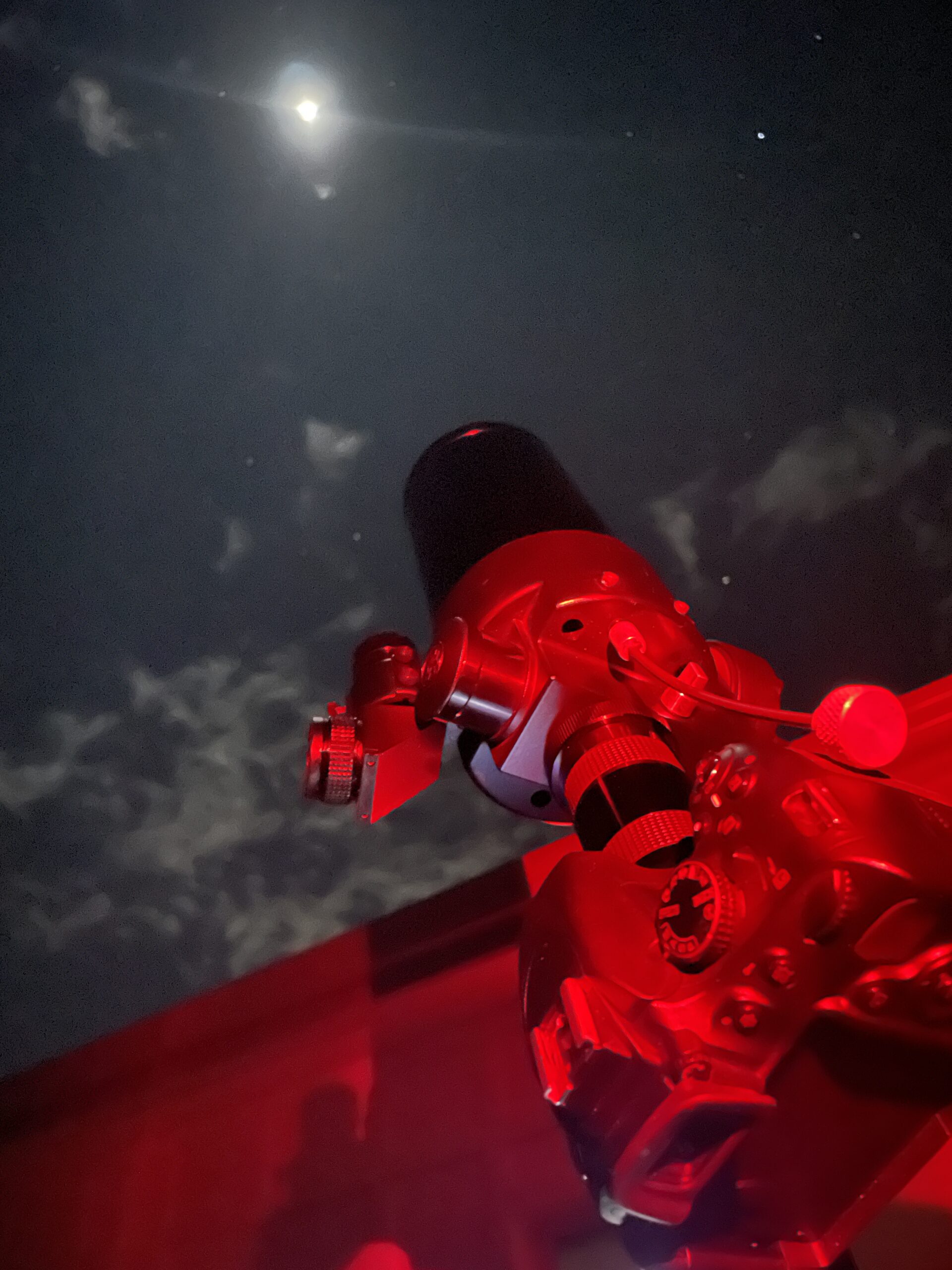
Before the eclipse begins, the Moon is brightly lit and should be exposed similarly to a daylight subject using low ISO and a fast shutter speed. As the partial eclipse progresses, brightness drops and you will need to lengthen exposures or increase ISO. During totality, the Moon can be several stops dimmer, often requiring higher ISO and exposures from fractions of a second up to a couple of seconds.
Use manual focus with live view and zoom in on the Moon to achieve sharp crater detail. Once focus is set, leave autofocus off. Shoot in RAW format for maximum editing flexibility, set white balance to daylight to preserve natural color, and bracket exposures throughout the eclipse to ensure properly exposed frames.
Recommended Camera Settings by Eclipse Stage
| Eclipse Stage | ISO | Aperture | Shutter Speed | Notes |
|---|---|---|---|---|
| Full Moon (before eclipse) | 100–200 | f/8–f/11 | 1/125–1/250 sec | Expose like a daylight subject |
| Early Partial Phase | 200–400 | f/8 | 1/60–1/125 sec | Brightness begins to drop |
| Deep Partial Phase | 400–800 | f/8 | 1/15–1/60 sec | Bracket exposures |
| Totality | 800–1600 (up to 3200) | f/5.6–f/8 | 0.5–2 sec | Moon is dim and reddish |
Setup Checklist
| Item | Recommendation |
|---|---|
| Camera Mode | Manual |
| File Format | RAW |
| Focus Method | Manual focus using live view zoom |
| Support | Solid tripod |
| Shutter Control | Remote release or 2-second timer |
| Image Stabilization | Turn off on tripod |
| White Balance | Daylight |
| Extras | Spare batteries and memory cards |
Exposure Strategy
| Technique | How to Use It |
|---|---|
| Exposure Bracketing | Capture multiple shutter speeds at each phase |
| Histogram Check | Avoid blown highlights during bright phases |
| Test Frames | Start before the eclipse begins |
| Interval Shooting | Capture at regular intervals for composites |