


A lunar eclipse occurs when the Earth passes directly between the Sun and the Moon, casting its shadow onto the Moon’s surface. This can only happen during a full moon, when the Moon is on the opposite side of the Earth from the Sun. If the alignment is just right, the Moon moves into the Earth’s shadow, which consists of two parts: the penumbra, where the sunlight is only partially blocked, and the umbra, where the sunlight is completely blocked. When the Moon passes through the umbra, a total lunar eclipse occurs, and the Moon often takes on a dramatic reddish hue due to sunlight refracting through Earth’s atmosphere—an effect known as Rayleigh scattering, the same process that gives us red sunsets. This reddish appearance is why lunar eclipses are sometimes called “blood moons.”
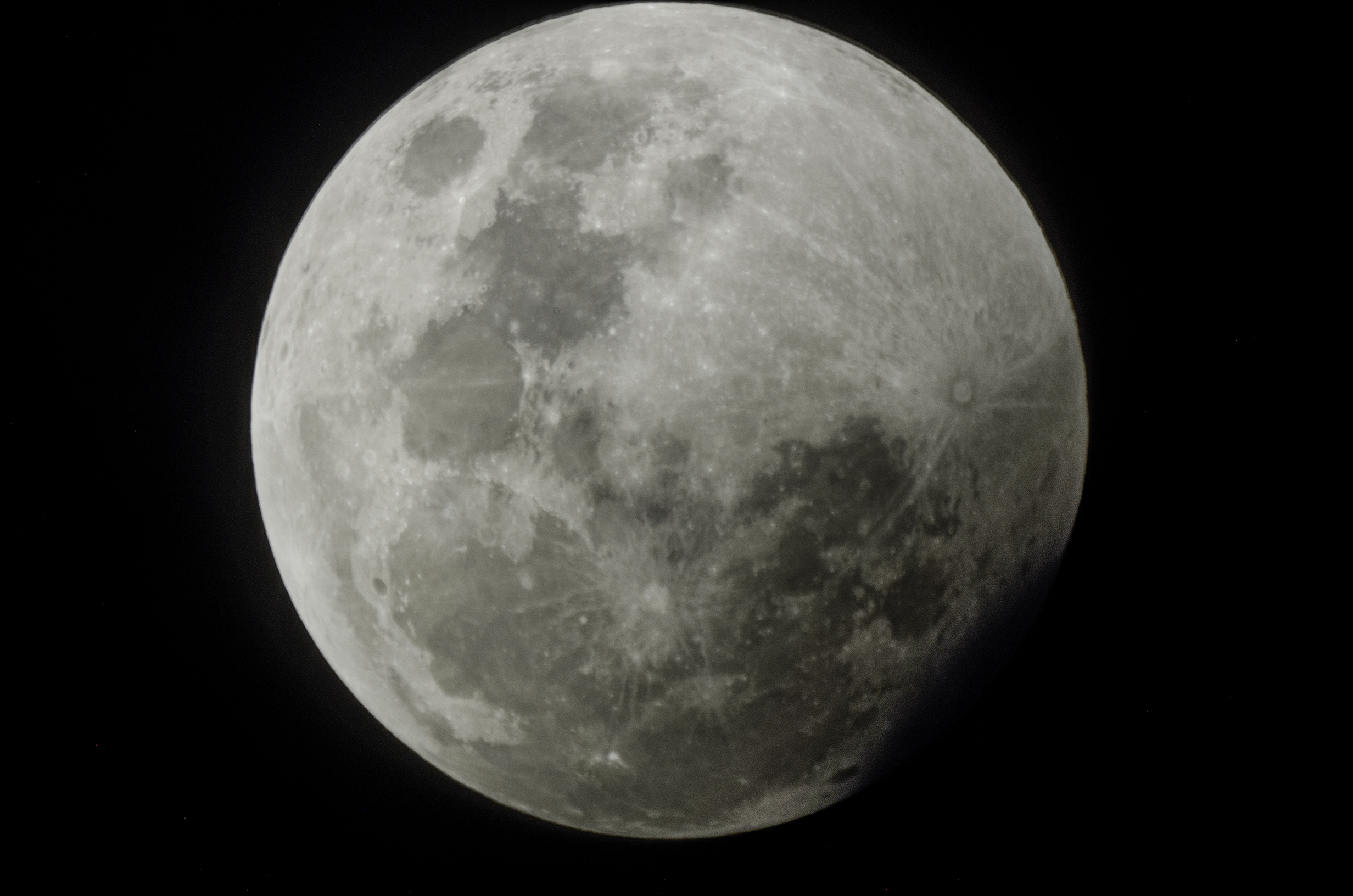
Lunar eclipses are safe to observe with the naked eye and can be appreciated without any special equipment, though binoculars or a telescope can enhance the view. Unlike solar eclipses, which are brief and localized, lunar eclipses can be seen from anywhere on the night side of the Earth and often last several hours from start to finish. Observers can look for the gradual darkening as the Moon enters the penumbra, followed by a more noticeable shading as it moves into the umbra. During totality, the color and brightness of the Moon can vary depending on Earth’s atmospheric conditions—dust, clouds, or volcanic ash can make the Moon appear darker or more coppery. Watching a lunar eclipse unfold offers a vivid demonstration of celestial mechanics in action and a powerful visual connection between Earth and its closest neighbor in space.
